
I realised recently that over time I’ve become a ‘native’. That word, of course, can very easily be loaded with pejorative or romantic associations. It can also be seen as potentially disrespectful towards indigenous people when the term comes from relatively recent settlers speaking of indigenous ancestral land.
Please let me explain what I mean:
In one sense ‘native’ can merely mean being born in a particular place, which obviously applies to everyone. But in a more meaningful sense, ‘native’ involves a deeper sense of belonging and having been shaped by that particular place. It doesn’t necessarily mean being born in that place, but rather coming to feel deeply at home in your place. Although that might not appear so important, I’ve realised that it carries far reaching implications for the sense of meaning in our lives.
What triggered this realisation of being a native, was my chancing upon an old essay on this very subject by Freya Mathews, the Australian environmental philosopher, where she writes of her conscious journey into becoming native and how it had greatly enriched her life. I realised that I have been on a very parallel path for a number of years, though it hadn’t occurred to me to think of it as to do with becoming native.
I think the particular importance of this is that there is a praxis available. It needn’t remain as merely an intellectual or romantic idea. Anyone can actively practise to deepen their sense of nativeness to great benefit. Eco-philosophy, deep ecology, integral and spiritual approaches often fall short of being able to incorporate in us, the fullest sense of belonging in the world and in my view remain thereby somewhat incomplete. I will illustrate what I mean using the example of my own native praxis, but first a little bit about our prevailing modernist outlook, which is quite antithetical to nativism.
Many sensitive alternative Westerners these days are quite familiar with what has now become a kind of cottage industry of books and talks all pointing out how we moderns are estranged and alienated from the material and living world and how this has historically arisen since the Enlightenment. While all this is very clarifying in conveying a broad understanding of our dilemma, it often leaves people with no clear way to do anything to mend this rift.
With nativism, in the simplicity of coming to feel our identity as becoming somehow inseparable from the place we belong, the Western paradigm of our being separate from the material realm because of our unique mental rational dimension, is undermined. I particularly want to speak to those of us living in urban or semi-urban conditions – which is now where the majority of Westerners now live – because the alienation is much more extreme.
We modern people tend to be floating, not tied to any one place at all, and by and large, the sense of loving and cherishing the land has dissolved. We’ve been marinated in a thoroughly materialistic outlook which sees the land as lifeless and available for any purpose which we see fit. From this disenchanted position, the land and all objects are merely material ‘stuff’ with no inherent value or essence and can be bought, sold, or discarded at our will.
Yet it doesn’t have to be like this. Freya Mathews puts the alternative beautifully:
The praxis I am suggesting here is simply this: love your world, whatever it contains. If your world happens to be a gritty or garish part of the city, seek the ‘world soul’ there. Do not turn away from it, but feel for the mysteries beneath the appearances. If your world contains computers and cars, be friendly to your computer and car. Use them in the service of your world, to enhance its beauty and improve its health.

My local wildflower street planting
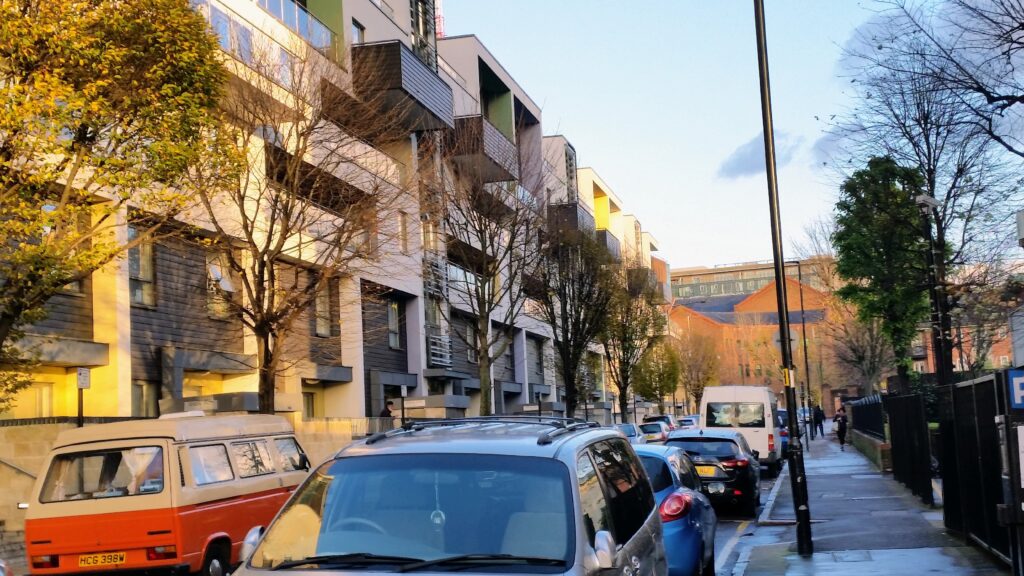
I live in a distinctly grungy part of inner London and to give a simple example related to the quote above, in the past I had long railed against the sheer volume of cars parked everywhere, clogging the local side streets like arteriosclerosis. I would fantasise about banning the majority from the inner city and greening the local streets, with opportunities for everyone to grow flowers and veg in the repurposed streets. And I would feel restless and frustrated about how much is wrong in seemingly every direction in the world.
Now, though I would still love my fantasy to one day come to pass, I’m much more surrendered to the given; to this mass of human artefacts in our built up environment.
I have been involved in many projects, protests and activities aiming towards eco-restoration, rewilding, reducing emissions etc. And it’s all important work (which I still continue in different ways). Yet as many activists, including myself, often find, it can easily be quite dispiriting when faced with the slow speed of positive change, and also with the sometimes seeming remoteness of global environmental issues. I’m not suggesting abandoning such larger global endeavours, but I’ve found an invaluable balance which comes from also embracing the local land, my home.
What’s kept me going is in no small part due to what I’m now calling nativism. Unlike current environmentalism, nativism involves a kind of surrender or acquiescence to the given in all its grunginess. I’ve come to love and be embedded in my particular local urban land and it’s become part of my very identity. I’m happily in relationship with and interwoven with my locale and all its many hued lives and personalities.

Feeding the local swans
I clear up the communal rubbish outside our block of flats several times a week; my wife and I plant flowers in small patches of derelict land in our street. Over the years, more local people notice and chat to me, expressing their appreciation and also starting to help. Even a local drug dealer on the corner next to one of our little flower beds recently expressed his appreciation to my wife.
I join others in tree planting in the local park, improving that mown grass desert. I protest at the local council’s spraying of herbicides in green spaces and lobby to stop data centres heating up local water bodies by abstracting the water for cooling. All such things bring me naturally into relationship with others who care similarly.
As I walk the urban local streets, I sense the pavement as alive in its simple yet mysterious given quality. I’m in touch with all the trees, bushes, buds, birds through the seasons and the local folk I know who I bump into. I feel I have a taproot into a deeper dimension of the land, so that I’m no longer an observer but a part of this lifeworld.
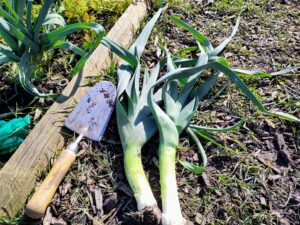
Everything is imbued with meaning and significance in this radical affirmation of the given in all its sometimes grotty messiness and beauty. I feed the local swans and birds all winter to assist them in these habitats which we have degraded. Growing vegetables and herbs on my local allotment and working with fellow growers is invaluable in re-enchanting my home, as is the act of eating food which grew in my own small patch.
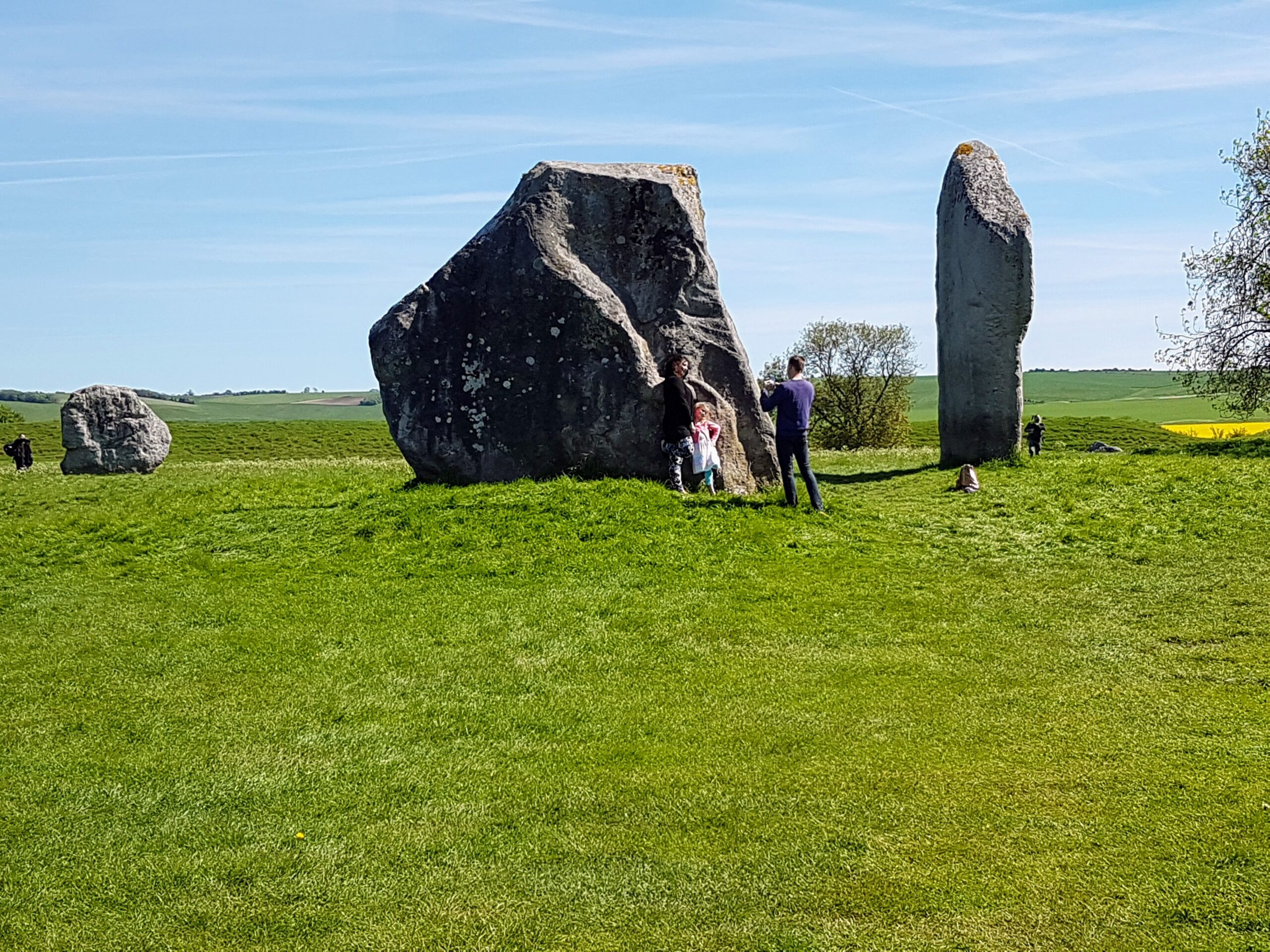
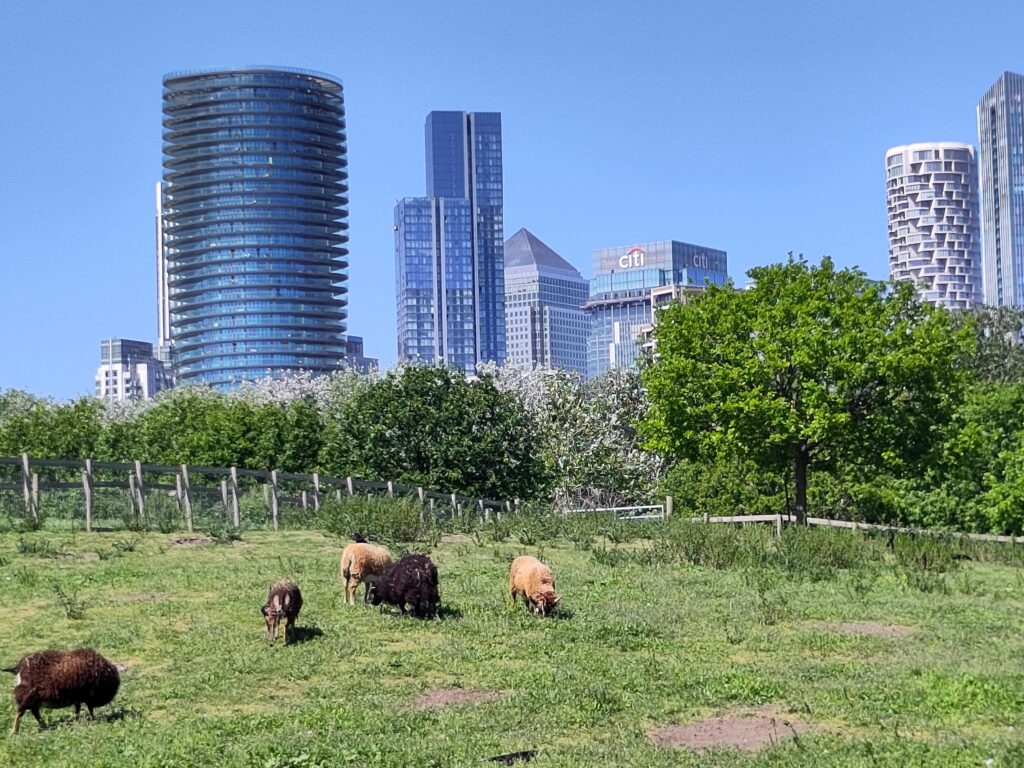
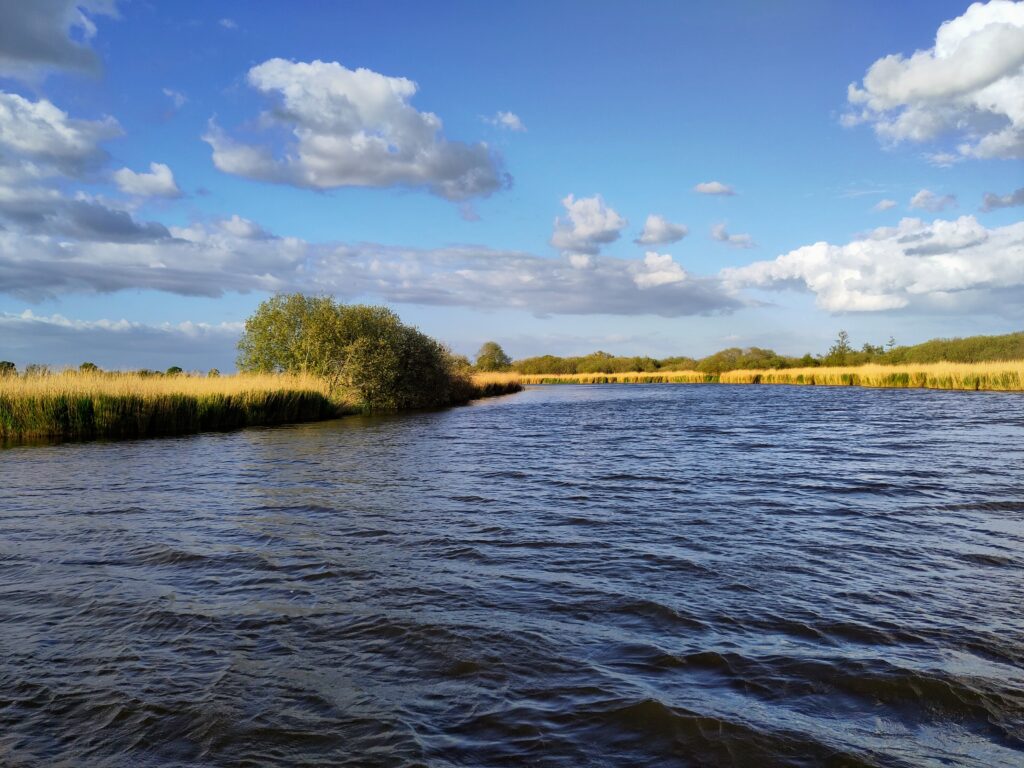
Many years ago, I received a lesson in accepting the given, delivered by some wading birds – lapwings and redshanks – at the local marshlands that I often hike through. A viaduct for trains arches over the marshes in this edgeland locale, and I got a rude shock when a high speed train thundered past overhead like a bullet, disturbing my sense of ‘naturalness’. But the birds continued feeding in the mud, entirely unconcerned. They were used to this regular event and they fully accepted their given world.
As Freya Mathews puts it,
The environmental project, of reinstating the ecological at the expense of the artefactual, perpetuates the restless impulse at the heart of modernity – the urge to make the world over in accordance with human values and preferences. By yielding ourselves to the world as it is, however, accepting that this, and no other, is our world, full as it is of refuse and junk, we begin to make the transition from the modern mentality of management and control, which is at the root of the environmental problem, to the profoundly countermodern mentality of affirmation of the given .
Modernity has reduced the previously sacred order of matter and place into commodities and property; yet our affirmation, attention and love can convert these back into the realm of the sacred. ‘Stuff’ can cease to be regarded as utterly disposable as we let go of materialism, and we re-imbue objects and artefacts with presence and meaning. In doing so, we also can rejoin that realm of the sacred in our very urban lives. The pull towards consumerism and development starts to lose its attraction, as that urge for ever new things subsides as we care for and hold dear those things and places with which our lives are inextricably interwoven.
By being committed to the local – which is that which is immediately given – from a non-dual perspective we can come to see it as ensouled, not being excluded from an animating principle, as is anywhere else in the world. As Mathews says, the final non-dual step is acknowledging the inner impulse or soul not only in the realm of biology, but in the order of matter generally.
Only when ensoulment is taken to its logical conclusion can we discover how to live attuned to soul in the world as it is, the world of concrete, tar and steel, of degradation and contamination, of the messes we have made.
In becoming a native, with all the deeper elements which it implies, there’s a shift from consumerism, with its implicit contempt for matter and its terrible consequences for the environment, towards a society which regenerates while conserving. By your identity being shaped by all the flavours and specifics of your place, it helps to restore kinship with all other local beings.
While being a native doesn’t meet all our ecological wishes, it does powerfully counteract modernity with its disdain and disrespect for matter, which has caused so much damage to the living world. In our more globalised culture, nativism can also remain benign, staying free of the possible downsides of ignorance and of hostility towards other cultures. A native culture can be authentic and unique without any supposed sense of superiority.
Of course, being native doesn’t at all preclude travel to other places. Nomads have always travelled while conserving a strong sense of being part of the lands they repeatedly journey through. I’ve also found that my desire for more ‘touristy’ trips has fallen away, along with the desire to have special experiences, whether that’s hiking in Nepal, snorkeling on the Great Barrier Reef, or seeing some especially rare bird. That all seems like part of the modernist paradigm of consuming experiences. Now I travel more slowly, noticing more, with hopefully more humility and in a manner that feels more like pilgrimage.

https://www.freyamathews.net/downloads/BecomingNative.pdf
BECOMING NATIVE: AN ETHOS OF COUNTERMODERNITY II Freya Mathews
11 responses
Love it, Chris! Yours is a journey which is valuable to all of us.
Thanks Chris – and nice to see you including Freya in your piece. She is extraordinary. The love of the place where we stand feels like the important journey now, and you eloquently express it. Stop being somewhere else – often in our heads or in our phones – and be here now – but with the land, with the rest of nature, which I feel is reaching out for us increasingly.
I was asked recently by a healer that I occasionally see, do I really trust that nature has the power to repair itself? Am I being too busy in my head plotting ways to save it, that I’m again distancing myself from ‘Nature’? Its a fine intricate journey to becoming animal again, without knowing what that might mean..
Hi Blake, I’m glad you like Freya too. She’s a rare philosopher who is totally down to earth and loving while being rigorous as an academic
Yes , wonderful observations , as ever – thanks 🙏
Wonderful writing and message Chris. I especially resonate with the message and clarity of your matured spirituality that embraces all, finding delight and a reciprocal union within the grit of urban living. The native in your telling not only lovingly solves the chronic modernist problem of detachment but also the more subtle ‘detachment’, or anti world bias that can occur in certain spiritual interpretations… I am reminded for some reason of the Wim Wenders film ‘Wings of Desire’ where the angel longs for the experience of a bad coffee on a frosty morning or the sharpness of a cigarette – the vivid appreciation of pure experience, lit by the eye of awareness shows us the every moment is to be cherished, not for the content necessarily but for the sheer beauty of existence in any form…
Thanks for your support, Patrick, and for the very clear points you have highlighted. The modernist detachment, and also, as you say, the anti-world bias of more than a few spiritual approaches, can be remedied by an embrace of being native
I really enjoyed your article Chris, learning about what distinguishes nativism and your neighborhood nativism.. So important to cultivate this kind of relationship to our surroundings in the midst of so much destruction and exploitation all over.. I’m fortunate to volunteer at a wonderful garden designed by Oudolf and have my own beautiful yard. I often close my eyes driving through parts of Detroit that seem to have been left to decay. But reading your piece changes the way I look at them. They won’t come back unless we relate to them in a fresh way.
Hi Kathy,
Glad to hear my experience resonates with you. I can imagine that parts of Detroit are a whole different level from what I’m describing, though the same principles of care and love are universal And how wonderful to help in an Oudolf garden and to have a beautiful space of your own, whatever its size.
Hola Chris! I will need to read your article several times I think. The idea of not railing against the degradation and indifference seen all around us is a very different approach from how I usually feel. To accept it as it is, owning it in all its grim imperfection. And making small but consistent offerings of beauty and caring.
Living in a “foreign” country gives me even more of a challenge in terms of becoming “native” in the sense you describe. Accepting things that “we” would never do in “our” country etc.
Anyway. Much to think about. Thank you for your continuing ideas about how to make sense of living in this crazy, beautiful and distressing world.
Hi Deborah,
Yes, I appreciate the extra challenge (and sensitivity needed) of talking about becoming a ‘native’ in a country far from the one where you were born. And wherever we are, it definitely goes against the grain of our eco aesthetics to accept the given in all its degradation.
Beautiful and fascinating piece, Chris, upturning modernity’s isolating impact in a very novel way. I appreciate your erasing the binary between ‘good’ eco-green versus ‘bad’ city grunge, which as you point out in the quotes from Freya Mathews, render us impervious to the ‘world soul’ of urban environments.
Ironically this detachment and disdain reinforces our separation and lack of care for those very urban environments. Thank you for this thought-provoking piece.