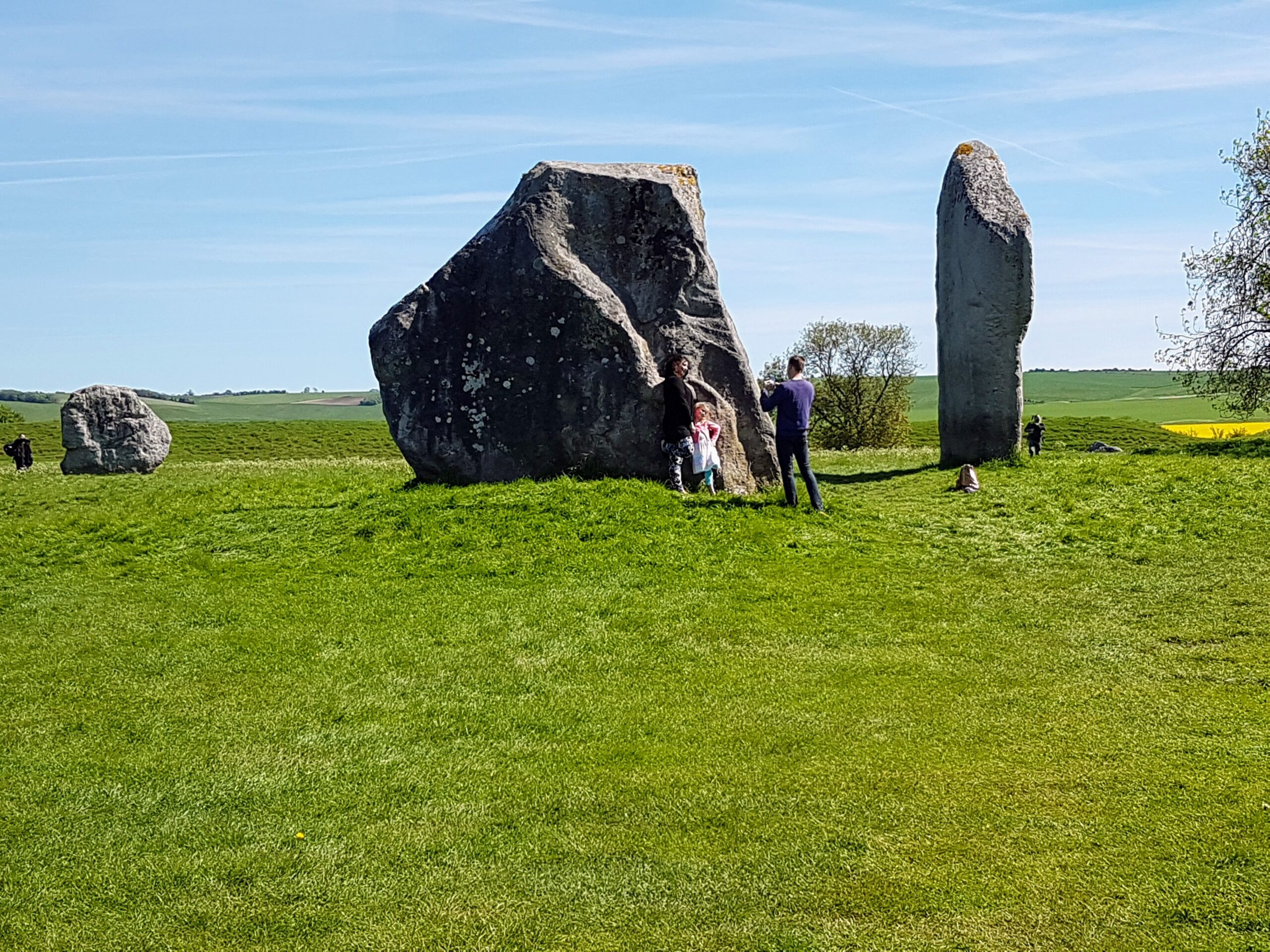
I came to realize clearly that the mind is not other than mountains, rivers, the great wide earth, sun, moon, stars.
Dogen, founder of the Soto Zen school
I use the term ‘animism’ to characterize what I write about in The Urban Animist, which hopefully conveys a general sense of how I view the world and the cosmos as in some sense alive and not merely inert. We’re not living in a dead universe with human beings the only points of life, consciousness, and subjectivity. There’s much more than that.
In the academic world, rather than animism, which often draws upon aspects of indigenous cultures, they use the term panpsychism, which sounds more technical yet can be more precise. Like me, the ‘new animists’, as they’ve been termed, tend to be less interested in abstract sounding philosophical discourse and instead are more fascinated with the immersive wonder and full sensory experience of living in the world. Animists are not overly concerned with definitions,
Really though, the two terms come down to much the same thing. For once, I felt it would be helpful to write a more overtly philosophical piece to illustrate what a very different worldview animism/panpsychism is, in contrast with the conventional modern, more materialistic outlook; and to show in relief, the huge and differing real world consequences between the two views. So do bear with me, as this is more far reaching and relevant than it might at first appear.
Panpsychism views mind or consciousness as a fundamental and ubiquitous feature of reality. There are differing approaches to panpsychism/animism and I’m particularly drawn to the version which environmental philosopher Freya Mathews calls living cosmos panpsychism. I’m indebted to her full explication of these terms.
In a deeper sense, what living cosmos panpsychism really means is that there’s no mind apart from matter and no matter apart from mind. Neither can exist independently of each other.
As Mathews states,
“Mind is a fundamental aspect of matter. That is to say, although mind cannot exist independently of matter, matter also cannot exist independently of mind. Mind is a part of what matter most fundamentally is”.
There’s no inert, non-living stuff out there. Panpsychism or animism really stands as a completely different paradigm to materialism, which is the view that most modern people have inherited by default since the Western Enlightenment. Of course, most people today wouldn’t think of themselves as materialists. In fact, no one I know would think of themselves as a materialist, and would likely feel such a label as being a bit gross and even disrespectful.
However, this fundamental view of materialism has been deeply enculturated leaving us with an invisible yet powerful operating system. Materialism implies that, apart from human beings, the world outside doesn’t really have any intrinsic meaning: it’s all stuff, brute matter, and basically, we can do what we want with it. It’s a kind of inert putty for us to mould, use, exploit, fashion, explode, or dig up, trash, however we like. There’s no sense of morality concerning the world because it’s just ‘stuff’.
So the modernist viewpoint is a very dualistic position between ourselves, who are the sole possessors of mind and mentality, and everything else, which is inert stuff. In our modern world, we’ve essentially stripped out all the magic, the mystery, the enchantment, and all sense of the sacred. In the modern world, the only remaining zone where there is room for a poetic, intuitive vision is art, but this is only accepted as a kind of fenced off area of little relevance to the so-called ‘real’ world.
This is really what materialism means, and we’ve all been brought up to be materialists, though as I said, we would never use that term to describe ourselves. We can have lots of great ideas and convictions that we believe in, but they’re all just within our human minds and are not necessarily connected with anything outside; so it’s completely anthropocentric.
This is very different from the animist or panpsychist position, which is essentially non-dualist. There is no division that you can find anywhere between humans and the world. This is all life; it’s all mind and matter, interconnected and inseparable in the whole cosmos. Panpsychist culture doesn’t clearly divide between the living and the nonliving, the natural and artifacts.
I can sometimes get exasperated with people locally in my urban area with how they tend to show no care for the neighbourhood. I am regularly clearing up casually discarded trash, and instead planting flowers, trees and seedlings. I try to make the area more livable for people, creatures, and plants, beautifying it in small ways.
Meanwhile, I see people seemingly oblivious, dumping rubbish in the street without a second thought, and I sometimes wonder how on earth people can do this. But I’ve realised that it’s not so much that people are uncaring or anti-social. They’re just not connected. Through no fault of their own, people are not really living in the real world because they are disconnected from it.
If you’re a panpsychist you’re viscerally part of the world. There’s a responsibility. You feel like you have a tap root, in effect, into reality, into the actual land and soil, or concrete, where you actually live. You care for it naturally because it’s part of you in a sense. And it’s home.
Whereas the modernist position easily leads you to a stance where it’s solely about you and your own goals. There’s nothing else really which matters except what you want. You try to find your own path, your own career, and what’s going to be the best for you and your family. It’s not intentionally selfish; it’s just living in a bubble.
Unfortunately something really becomes lost in the culture of modernism. The word culture is derived from the Latin, which originally meant caring for, cherishing. But if it’s only about yourself, you live in a vacuum of your own mind, your own thoughts, your own desires, wishes, hopes, and ambitions.
Modernism is characterised by a restless movement towards something more, ever new, constant progress, wanting more. We become consumers and the idea of progress and constant development is always regarded as good and necessary. Never satisfied with what is, we now have algorithms preying on us which are designed to stoke that sense of incompleteness and foster consumer desire.
So it’s very much the opposite of the animist outlook of just being satisfied with what is, with the given. Where I live, this is actually my home, and I care for it, whatever it’s like. It’s a very different position, where you don’t fundamentally want anything else apart from basic needs.
For modern people, unfortunately, life has just become their due, and people feel they deserve it. The world is your oyster, as they say, The modernist position is one of rights and getting one’s due. It says, “I need to have this, it is my right, I want it, and I should be given it.” There’s no sense of gratitude that you’re receiving anything.
Obviously, many people are kinder and more caring than what I’m portraying here, but I’m just contrasting the basic philosophical position that stems from the modernist mentality in its full-blown form.
Another way of saying this is that regrettably there’s no sense of grace in modern life. I think grace is so important and is about having an attitude of thankfulness. In fact an attitude of grace is at the heart of panpsychism culture. My wife and I say grace before the evening meal each day. It’s just a simple gesture, but it reminds us to be thankful for the sustenance we receive.
We are thankful that we have an abundance of nutritious food on our plates, and thankful for all the beings, the plants, animals, and people that have strived in order for us to have it, and how privileged we are to have this gift. Living with grace is about having an appreciative attitude in everything one does, and I think it’s an attitude that spreads out throughout life.
Funnily enough, liberalism, which also arose out of the Western Enlightenment, and has clearly brought much good, is also implicated. It promises metaphysical pluralism yet at a deeper level it is based on a metaphysical commitment to materialism and mind/matter dualism. Liberalism has led to a state of affairs where effectively anyone can do what they want, providing it doesn’t harm other people. It does mean that everything is relative and optional. As a liberal, you can take up spiritual beliefs (or even be an urban animist), if you want to. Or you can choose to be an atheist, materialist or conspiracy theorist. But whatever you do or don’t do has no greater significance and in the end, doesn’t really matter. Now there is no overarching principle or morality since modernity has swept such principles away. There’s no overarching equivalent of The Dao or The Dharma, as in the East, or the ‘Law’ of Australian Aboriginals.
Many modern people do sincerely follow religious or spiritual paths and would clearly object to being called materialists, since they hold Spirit or God most highly. Yet most of the great religions have explicitly given humans dominion over the world to use for our own ends. Of course there are exceptions such as Jainism or the example of St Francis. Perhaps only Daoism and Chinese Ch’an (Zen) have always held non-dual outlooks, which don’t fundamentally separate out humankind from the living cosmos.
Today especially, many modern people are attracted to non-dual spiritual teachings and I also have many years of experience with such spiritual traditions. An objection can be made that these are surely the very opposite of a materialist worldview. Yet my experience has been that in practice, the world is often downplayed or even largely ignored in many such approaches. I’ve long wondered how the non-dual can seemingly largely exclude the phenomenal world. Strangely, this can lead to what is termed ‘non-dual’ being in effect rather similar to a materialist worldview in that both give little value to the world.
Even a tradition such as evolutionary spirituality which has a wider remit than only the individual personal self and which has developed beautiful and profound dialogue spaces between groups of people, still tends to ignore the world outside a more expanded shared human consciousness. Again I speak from long personal experience with this tradition and affection for it.
As I said at the beginning of this piece, I think that the more you look into the differences between the materialist and the panpsychist/animist worldviews, the more it opens up. With the panpsychist position, you can’t separate yourself from life. Your sense of self is not a private internal self; it’s part of the world, embedded in the world. The panpsychist self is not a free floating psychic entity pulled around by this or that desire to adopt any particular identity, being part of the very Land itself. To me this is a way to be truly at home and in love with Life.
I’ve deliberately painted a black and white picture here for clarity. At the same time, I’m heartened by the way a different pull towards wholeness seems to be seeping into modern society without it being recognised for what it is. Kids have always started out in life with an animist outlook, talking naturally to animals until we iron it out of them. People wouldn’t call it panpsychism or animism, yet today with the crazy momentum of modernism, many people are experiencing and recognising the great physical and mental health benefits of merely being in nature, walking in the park or woods or doing gardening. Reality has a way of finding a way in.
There is neither spirit nor matter in the world.
The stuff of the universe is spirit-matter.
Pierre Teilhard de Chardin