
Many of us don’t have a very good sense of smell and this ability doesn’t tend to be seen as that important in our lives. To give a rather bizarre illustration, in a recent survey, 1 in 6 US college students, when asked to choose, said they would rather lose their sense of smell than not be able to keep their mobile phone.
Our olfactory ability often tends to diminish as we get older and many people don’t have a good sense of smell to start with, even when younger. Covid led to many people losing their olfactory sense almost completely, and for some, it hasn’t returned after their recovery from Covid.
I guess I’m a bit of an oddity when it comes to smelling. Each morning I step out on our balcony, look and listen to the scene, but also, I am acutely aware of smells. The breeze brings a fascinating mixture: there’s the varying qualities of the air, whether light, heavy, fresh after rain, dry or moist; there’s the hint of the rich aroma of Buddleia blossom from nearby waste ground; hints of cooking from nearby apartments, including a spicy dal from Bengali neighbours; a faint acrid tobacco smell from a passerby in the street.
I find all these different hints of scent tend to have an awakening quality on me, as if somehow they light up my consciousness.
Losing one’s sense of smell is generally not seen as so much of a handicap when you compare it with the very serious handicaps of losing one’s vision or sense of hearing. Yet for those who experience loss of smell (anosmia), it can have debilitating effects and has been very clearly linked with depression and anxiety.
Our ability to taste food is affected too, since our taste palate is quite basic, being limited to only sweet, sour, salty, bitter and umami. The complex and myriad flavours of food are largely a result of their smell. Also, the sense of smell is a powerful connection to memories and to culture.
The good news is that our sense of smell can be regained at least to a degree, by smell retraining therapy. This entails sniffing a range of scents every day for a minute or two each.
It’s suggested to use the likes of flowery perfumes, eucalyptus, peppermint, pine, citrus and cloves to help the brain retrain to recognise them.
I don’t know why, but right from early childhood, I would instinctively smell things. If given a new toy, I would look at it and feel it, but also smell it. I would open a new book and smell the spine. Young friends used to call me ‘Sniffy’, but to me it was just a natural way to experience my surroundings more fully. And this habit has continued all my life, with the result that my sense of smell is quite acute.
When I’m out walking, I’m conscious of the way scent permeates our lives completely, if we are aware of it. I note the scent of the trees, the cool rich humus laden air in the woods ( tests have shown that molecules of healthy woodland phytochemicals can be found in our bloodstream on breathing woodland air). I sense the rich sweetness of summer blackberries just from the breeze blowing off the bramble thicket, let alone the luscious aroma when I pick berries with blackberry-stained hands. And as I mentioned, at this time of year, the sickly sweet, and overpowering aroma of Buddleia evokes rich late summer memories stretching back a lifetime.

Out hiking, I’m often aware of other walkers long before I see or hear them, by the pungent and acrid smell of tobacco, if any are smokers. And around my local urban neighbourhood, I sense the ubiquitous musky, skunky aroma of marijauna long before seeing the smoker.
Scents evoke memories and emotions more vividly than any other sense and they connect us with everything.
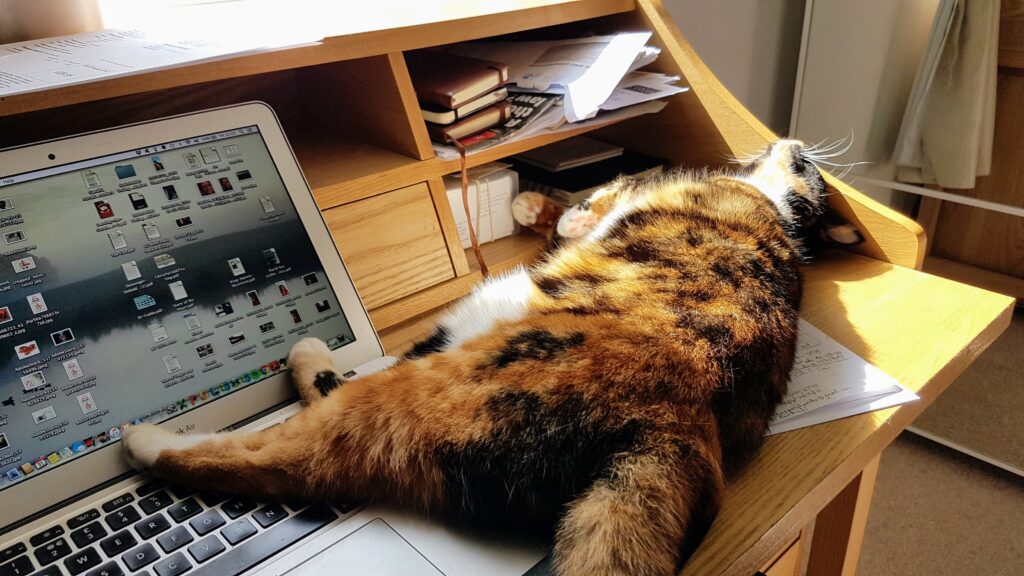
Yet my sense of smell is vestigial compared to our cat. She will spend ages absorbed in sniffing and rubbing on my shoes after a hike, with the scents seemingly acting like a fascinating full length documentary to her. I was surprised to learn that although dogs have a very extraordinary sense of smell, tests have shown that cats have a greater ability than dogs to distinguish between similar scents.

I was fascinated to learn of some academic research on indigenous peoples of the Malay Peninsula. Studies have shown that indigenous hunter gathers in Malaysia have an unusually complex understanding of smells, as demonstrated by the number of words they have for a variety of odours. It has long been assumed that olfaction is the ‘mute’ sense, the one without words, and long standing research with English speakers has confirmed that.
The researchers tested the colour and odour-naming abilities of two similar groups: the Semaq Beri and the Semelai people: the former being hunter gathers, and the latter settled horticulturalists, yet with similar languages and living in similar environments.
The hunter-gatherer Semaq Beri were able to name smells with ease in the same way they named colours, whereas the non-hunter-gatherer Semelai struggled to name smells.
These findings were supported by cultural observations of the Semaq Beri, who consider odour to be so important that social spaces are carefully managed to avoid inappropriate mixing of individuals’ personal odours. If a brother and sister sit too close together, for example, it is considered incest due to the combination of odours.
The scientists wrote that, “For the hunter-gatherer Semaq Beri, odour naming was as easy as colour naming, suggesting that hunter-gatherer olfactory cognition is superior….while settled peoples’ olfactory cognition is diminished.”
It makes sense to me that this enhanced olfactory perception, particularly among hunter-gatherers, would be crucial for survival, involved with tasks like foraging, hunting, navigation, awareness of dangers and identifying social relationships.
Also, because of the strong links between scent and its evocation of past memories, which I am very aware of, I could imagine how smell might play a significant role in cultural traditions, connection with ancestors, or maintaining a sense of cultural continuity.
I was interested to learn that of the five senses, smell is the most evolutionarily ancient and one we share with the most primitive creatures. Smell is essentially chemosensation and even bacteria can sense and react to chemical molecules while they are blind to light and deaf to sound. Every attractive aroma or noxious odour is caused by molecules that have wafted into our noses and been recognized by the specialized neurons deep inside.
So I guess this story is in praise of our neglected and unglamorous sense of smell. And the good news is that it can be cultivated to quite a degree. I’ve found that it can bring a deeper and richer connection to and experience of our lived world. An enhanced sense of smell really does add a whole dimension to life and being awake.

4 responses
Interesting post to read, Chris. It’s true, small isnt naturally a sense that I think of as important as perhaps sight and sound, and feeling-sensation. But on nights where the white flowers are exuding their perfumes to attract moths, or the fruit trees have their essences out on the air – or the pine and eucalyptus heat in the sun, there are many smells I pick up. I have noticed lately when I visit my local rivers or paddling along the canal, I have to force myself to smell the water, because I feel that their smell holds vital clues to judging the quality of the water…
What a fascinating and original read Chris… Sight/Vision does get a lot of our attention, but your mention of how old and primary is our sense of smell especially related to memory definitely holds true. I’ve noticed when I encounter a foul smelling something, such as a decaying animal when out hiking, the physical response is pre thought and quite visceral. Likewise with a sweet smelling flower such as Jasmine, I find myself drawn towards it physically. We seem to have a deeply felt sense linked to smell. Where as the sight alone of these things can have a neutral impact.. Fascinating!
Really interesting Chris to hear of how different cultures have such sophisticated and nuanced awareness of scent and smell. As someone who has been losing her sight for the last thirty years and is quite close to total blind now I’m so aware of how my sense of smell not only orients me in the world, often before sighted companions have worked things out, but also connects me to the world around me. A walk in the woods or by the river for me is I believe a much richer, more connected experience because I’m picking up so much through my nose and my ears, even my skin. I think vision often dominates to the point where other senses take a back seat without us realising. And my guide dog George will tell you that his world is all about smell! Even when a treat is thrown for him he won’t try to catch it, he’ll let it land and then sniff it out!
Anyway, thanks Chris. Good to discover your writing.
Hi Annie,
Thanks for your moving reflections from your own experience. I think you’re right that vision is often overemphasised in human beings and especially these days when many peoples’ reality has become more and more through gazing at screens – and so the other senses are used much less. All the best, Chris