
Walking, my favourite activity, flowing and relaxed. And walking is what our human bodies have particularly evolved to do over hundreds of thousands of years; no wonder walking is now being recognised as the healthiest exercise. I’m not exactly sauntering, as I do have a destination, but I’m not in any way hurrying to arrive; there’s time to let in my surroundings.
Following the side of my local docks on a cold November morning, I see ripples expanding out from the surface of the sunlit water. A grebe emerges from underwater, an adolescent, with a small fish glinting silver in her dagger-like beak. Quickly and eagerly swallowing the fish, she dives again, while I remain on the dockside, somehow entering into the bird’s experience, almost as if I were actually feeling this morsel of food. With winter approaching, the grebe will not long have become independent of her parents’ feeding, and the art of underwater fishing has to be mastered fast or face starvation.
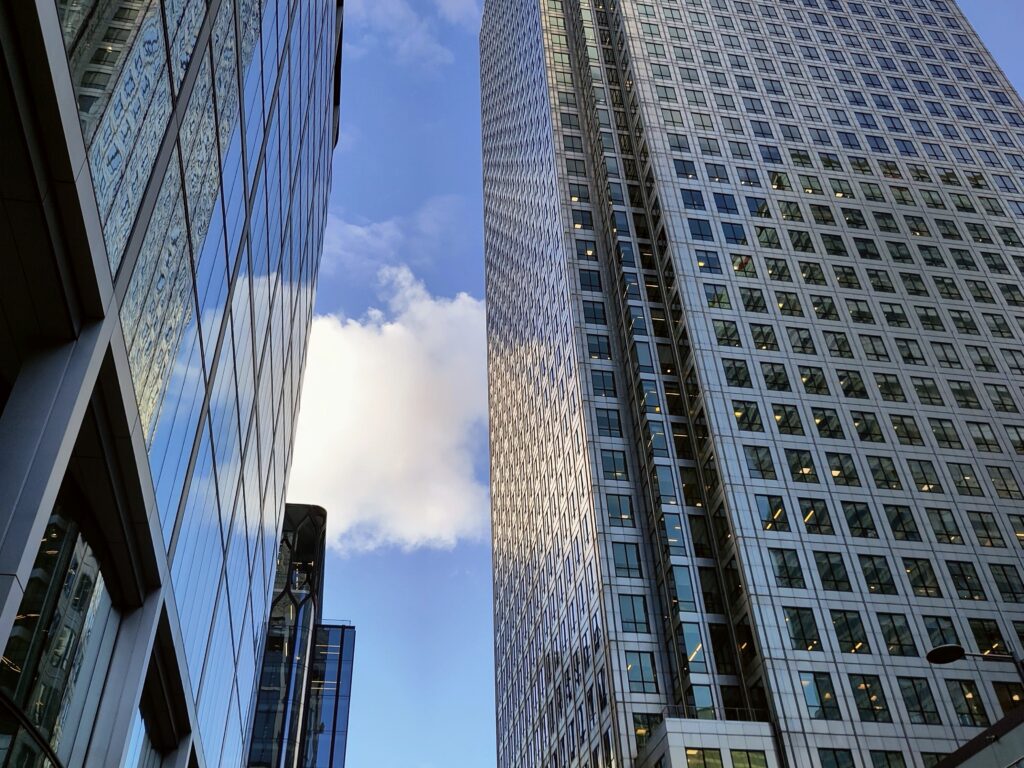
I’m walking through East London and I pass through the gleaming steel and glass financial towers of Canary Wharf. The people streaming about look purposeful and contained and there is scant interaction.
Though you could dismiss these silvery skyscrapers as completely unnatural, I meet them also with wonder as the sunlight glints off the vast glass walls. I watch the eddies of fallen leaves dancing in the whirlpools of wind created in these canyons. Above, gulls wheel in the air currents, at ease in these cliff top resemblances to their ancestral coastal homes.
Wherever you are, urban or rural, there is the democracy of weather, and the wind plays games in these strange vertical hills. The wind flows round me, inside me as I breathe in, swirling on my skin, touching me. Spirit, psyche, atmosphere (from the Sanskrit atman, meaning Self ), are all words which grew out of the ancient respect for and sacredness of what were seen as the living winds.
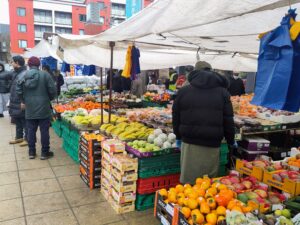
From the rather pristine clean zone of the financial enclave, I wander out and into a street market, stalls piled with fruit and veg in the open, and fish and crabs laid out on beds of ice.
Where previously all was sight and surface, now it’s smell, taste and sound, with traders shouting their wares and the strong smell of fish pervading. Here, many shoppers are of Bangladeshi heritage and it’s a welcome sensory enlivenment in comparison. I touch the racks of clothing hanging for sale as I pass and enter into this street market world.
Hopping on a local train, it’s again another world, with passengers resolutely avoiding eye contact and the majority looking at their smartphones or ensconced in headphones. I look around and make eye contact with a dog and a toddler. A popular blog with many likes, recently criticised those rare oddball passengers who travel without doing something like engaging with their phones hi and how it makes others uncomfortable.
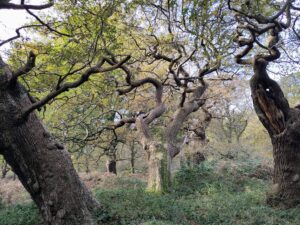
It’s certainly easier, as a nature writer, to write about wandering in an ancient wood with that sense of enveloping ancestral belonging. And all things being equal, I certainly prefer such a setting, and it’s healthier and more restorative for our human organism.
Yet, with more than fifty per cent globally of us now living in urban areas, it feels important to find some deeper sense of belonging and harmony for this ever increasing urban majority.
The earth also breathes under and through the glitz and hubris of Canary Wharf. Layers of history lie beneath, with several centuries of Empire shipping trade which built these docks and the many sockets who toiled on them; below that, the swampy marshes which would have been regularly inundated by the surrounding Thames, and a home for grazing wildfowl, in the days when humans wouldn’t have dreamt of building dwellings on a flood plain.
It just takes a bit more attention to see and feel below the concrete carapace of regular humdrum busyness. Then it feels like emerging from the trance of modernist utilitarian life. Everywhere is alive and actually the usual natural/unnatural dichotomy doesn’t really make sense. Canary Wharf financial district is not really unnatural; it’s just very extremely depleted in terms of its biodiversity and overly full of human artifacts – which makes it much harder to stay connected with mother earth.
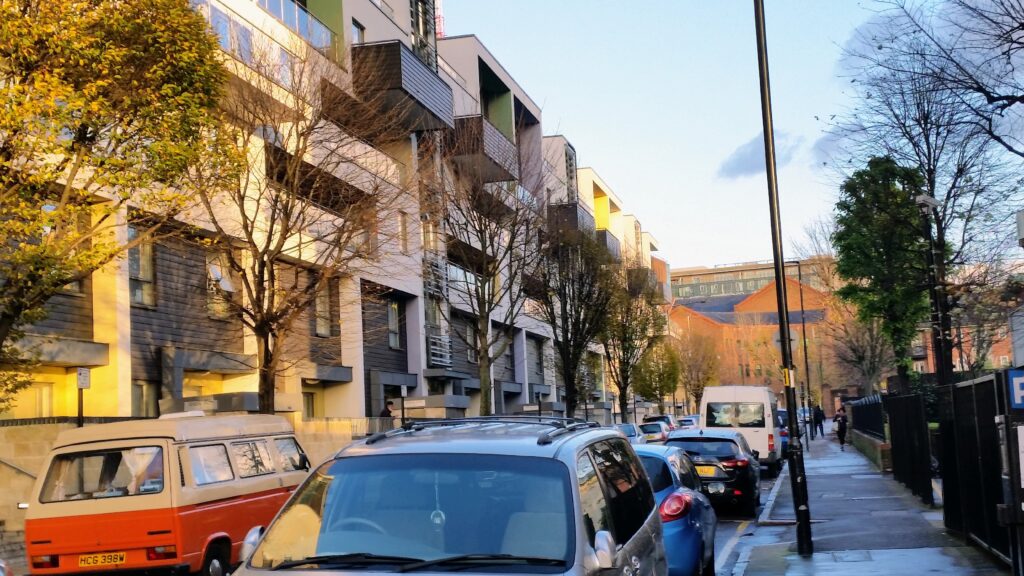
I prefer woodlands or marshes with an infinitely greater biodiversity but wildness is everywhere. Come to my local street corner on a Saturday night and see the drug deals going down there and hear the skidding tyres. And Canary Wharf is an extreme case of nature impoverishment. Many leafy suburban streets are full of birdsong unlike the bare prairie monocultures found in intensive rural agriculture.
Many of us are increasingly retreating from our embodied home into the detached worlds of screens, headphones and virtual life. It’s understandable, since letting in the tumultuous overload of sensory reality can feel like too much and can be painful and disturbing as well as enlivening.
This sensory animation has become more and more home to me, and merely ambling around my local streets is always fresh and a source of wonder. I resonate with what renowned Jewish theologian Abraham Heschel proclaimed:
“Our goal should be to live life in radical amazement—get up in the morning and look at the world in a way that takes nothing for granted. Everything is phenomenal; everything is incredible. Never treat life casually. To be spiritual is to be amazed.”
I seem to be in anything or everything, rather than being in a personal exclusive mind of my own. I think it partly has to do with long practice over years and also due to the fact that at this point in my life, I don’t fundamentally desire anything, so this leaves me more present and available for life.
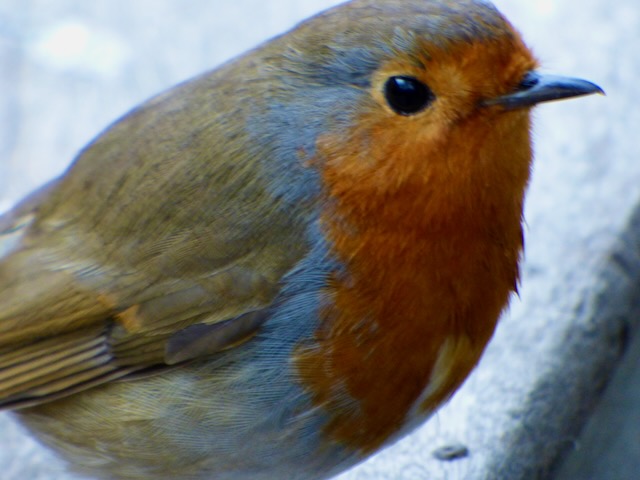
I find that I start to naturally feel the experience of others, empathising, whether they are fellow humans, street pigeons, soaring gulls or the crabs on the fishmonger’s ice. Language is universal, though of course most beings don’t converse in words. I talk to other creatures I meet in my normal English, as it’s the emotional tone that’s conveyed and I often find it puts a blackbird or a fox at ease.
We are all part of and partake in a vast sentience which is not ours, but is rather, the Earth’s. The mind isn’t in us; we are bodily in the mind along with all other beings.
It strikes me that it is being porous; not insisting on being rigidly bound to a separate mind, supposedly located in my very own little brain.
As the great Zen founder Dogen said eight hundred years ago:
“Whoever told people that ‘Mind’ means thoughts, opinions, ideas and concepts? Mind means trees, fence posts, tiles and grasses”
4 responses
Yes , excellent – very fresh , very enjoyable to read 🙏
Well walked
Well written
Well read
Well satisfied…
A thoroughly enjoyable read Chris as you take us through the urban spectacle! I sense the play of Atman and Anatman in your writing, where you convey the sheer delight of the experiential, which is not compartmentalised into conservative interpretations of what is ‘spiritual’ and what is not. You poetically convey how it is to be open and unfiltered yet finely discerning… Magical
Thanks Patrick! You summarise very well what I was trying to convey